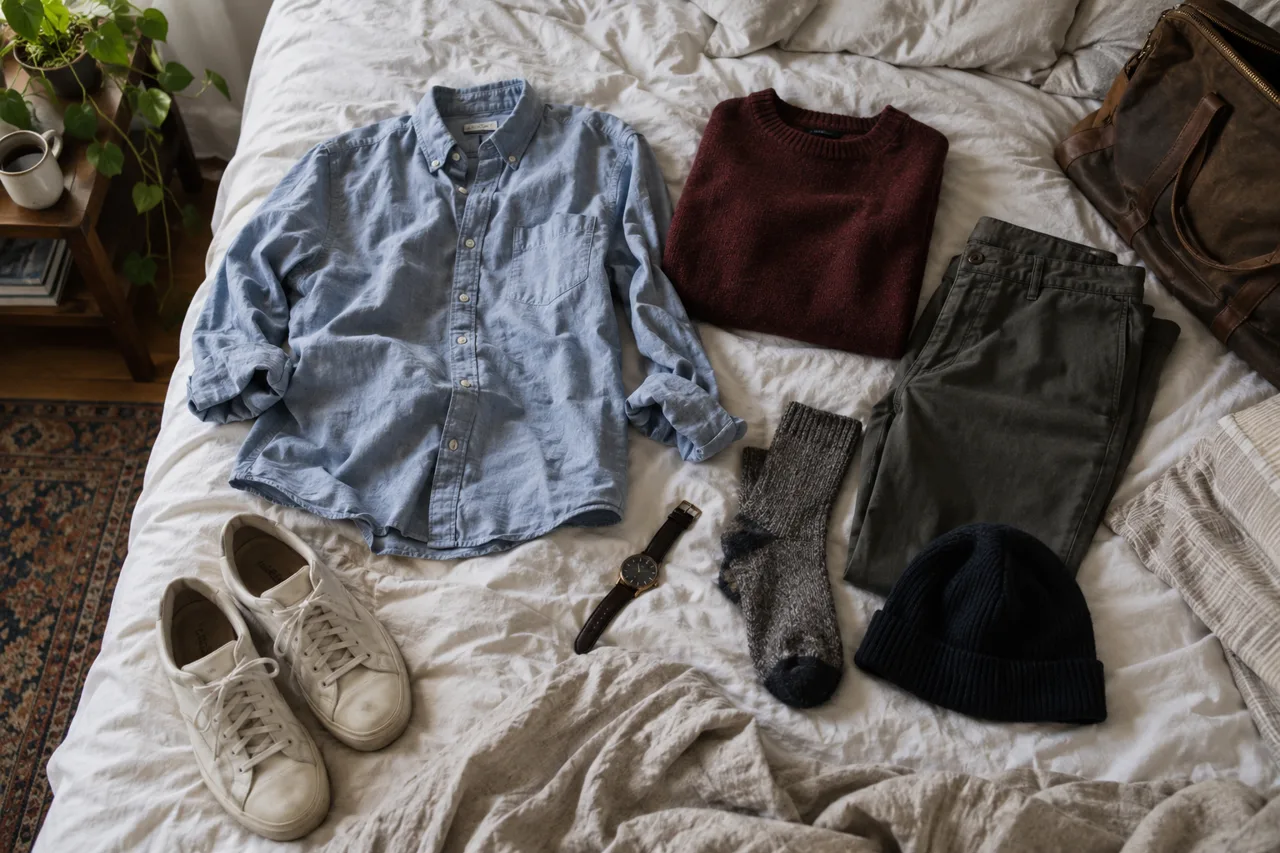
A useful weekend wardrobe begins with the weekends you actually have. Maybe yours involves a grocery run, a long lunch, time outdoors, and an evening with friends. Maybe you work weekends and need a different rhythm entirely. The starting point is your routine, not a photograph of twelve matching garments arranged on a rail.
Instead of chasing a fixed capsule count, build a small set of combinations around repeated situations. Keep enough variety for your climate, laundry schedule, and preferences. The goal is to make familiar clothes easier to use, without turning your wardrobe into another system that needs constant management.
Step one: describe three real days
Think back to three recent weekends and list where you went. Record activities rather than aspirational identities: walking to the market, visiting family, working a shift, eating outside, or spending the afternoon at home. Beside each, write the clothing problem you remember. Perhaps a shoe rubbed, a sleeve got in the way, or you felt too dressed up.
Patterns tend to be more useful than isolated occasions. If you walk most Saturdays, comfortable footwear belongs at the center of your wardrobe. If a particular formal event happens once a year, it needs a solution, but not necessarily a place in the everyday rotation.
Now check which clothes already solve those problems. Pull them out before shopping. You may discover that your apparent shortage of outfits is really a shortage of clean tops, a forgotten repair, or a jacket that does not fit over your preferred sleeves. Naming the specific gap makes the next decision smaller.
Step two: find your dependable bottom half
Choose two or three bottoms you genuinely like wearing. This is an example, not a limit: someone with a long laundry interval or a changing work schedule may need more. Jeans, trousers, skirts, and shorts can all form a base if they fit the life you described.
Try each with the shoes you use most often. Check the hem length, the waistband while seated, and the pockets with ordinary contents. Keep the combinations that feel straightforward. If one pair of trousers only works with shoes you dislike walking in, it may belong in an occasional outfit rather than your weekend core.
There is no requirement to choose black, navy, and beige. A familiar patterned skirt or colored trouser can be just as versatile within your own wardrobe. Judge versatility by the combinations you want to wear, not by how neutral an item appears on a shop shelf.
Step three: build connections, not duplicates
Add tops that work with more than one chosen bottom. Put the combinations on rather than judging them on hangers. Necklines, sleeve volumes, and garment lengths change how two pieces relate. A shirt that looks ideal beside a skirt may feel awkward once both are on your body.
Look for useful differences. One top might be relaxed enough for errands; another might feel right for a casual dinner. They do not need to perform every possible role. A wardrobe made entirely of compromise pieces can become strangely unsatisfying, even when everything technically matches.
Color repetition can help without becoming a strict palette. You might repeat the blue in a print through a plain shirt, or use the same dark shoe with several outfits. Let one or two familiar connections do the work. You do not need to replace good clothes because they fall outside a newly invented color scheme.
Step four: make the outer layer part of the outfit
Outerwear often determines whether a small wardrobe feels usable. Try your jacket or cardigan over every intended combination. Check shoulder room, sleeve bunching, and whether the hem lands where you like it. A top that only works without a coat may still be useful, but it is not an all-weather answer.
Choose layers for the conditions you repeatedly encounter. Someone moving between heated rooms may prefer easy removal; someone spending long periods outside needs a different plan. Our guide to adjustable layering explains how to give warmth and weather protection separate jobs.
Keep one complete outfit ready for a less predictable day. That might mean a comfortable base, a layer that folds easily, and shoes suitable for your usual route. The combination should work with the bag you normally carry. Otherwise the final accessory can undo an otherwise simple morning.
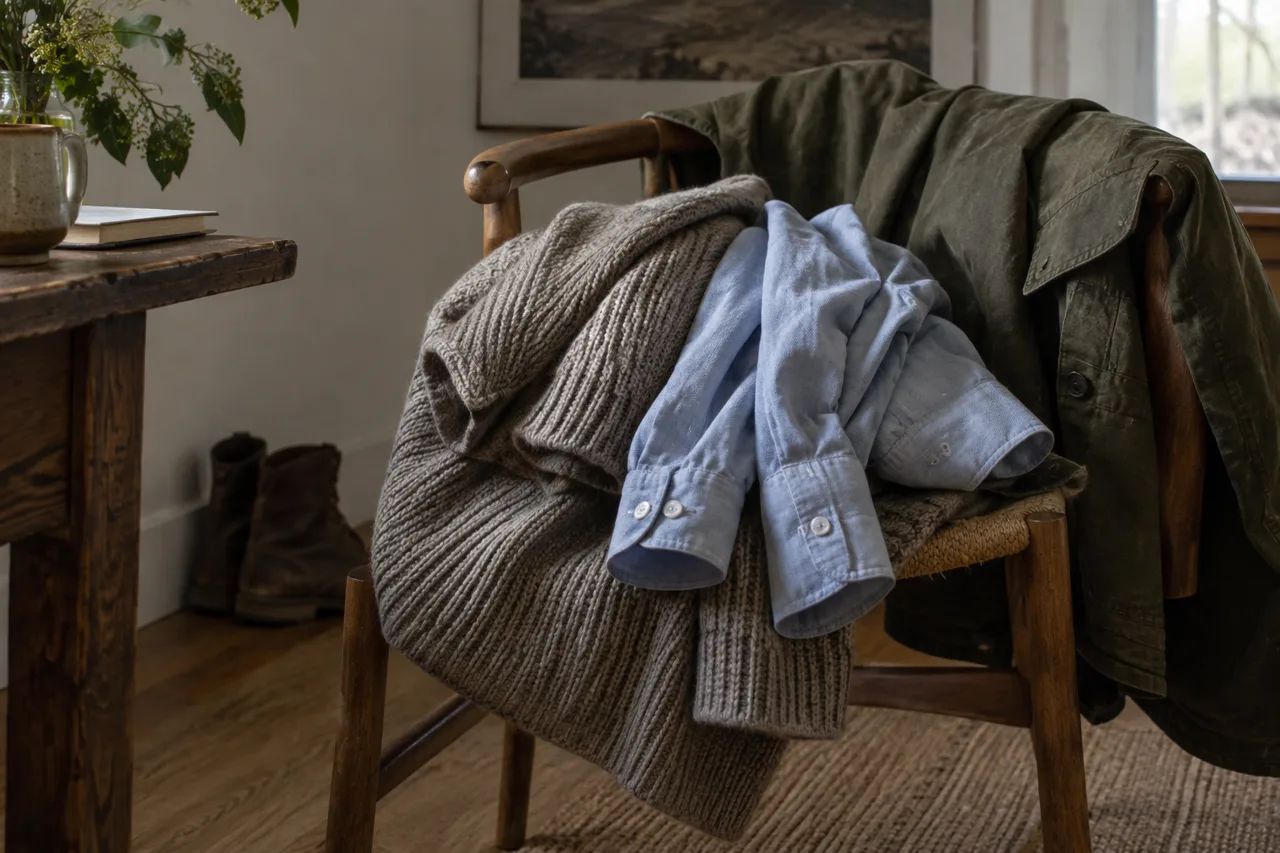
Step five: test the laundry reality
A capsule that only works when every item is clean is fragile. Think about how often you wash, what needs to air or dry, and which garments require extra care. Keep enough everyday basics to bridge the real interval between laundry days without relying on a rushed wash before every outing.
Read the care instructions before adding an item to the core. The FTC’s explanation of clothing care labels describes the purpose of those instructions. Follow the garment’s label rather than assuming that all items made from the same fiber can be treated alike.
A beautiful piece with demanding upkeep may still be worth owning. Just assign it an honest role. If it will spend much of its time waiting for special cleaning, do not count it as the dependable shirt you expect to wear every Saturday. Planning around maintenance is part of planning around your life.
A sample weekend, assembled three ways
On Saturday morning, relaxed trousers, a simple tee, and your usual walking shoes might handle errands. An overshirt provides another layer if needed. Nothing here needs to be new. The useful work happens in checking that the trouser hem clears the shoe and the pocket holds what you need.
For lunch later, you could keep the trousers and change to a top with a neckline or texture you enjoy. A different earring, watch, or scarf may be enough if you like accessories. Changing the whole outfit is optional. Repeating clothes is ordinary, and there is no need to disguise it as a styling challenge.
On Sunday, the same overshirt might work with jeans or a skirt and a fresh base layer. If you are planning a short trip, these repeated connections can also form the starting point for a compact travel wardrobe. Adapt the examples to your own level of formality and comfort.
Shop only after the trial
Wear the proposed combinations for a couple of ordinary weekends before adding more. Keep a short note of the moments that did not work. Specific observations help: “the sleeves bunch under my coat” is more actionable than “I need better clothes.” You may be able to solve the problem through a different pairing.
When a purchase really is needed, name its job before browsing. A washable top that fits under your jacket is a clearer brief than a wardrobe refresh. Check whether an alteration or repair could make something you own fill the same role. Neither option is automatically cheaper or better; compare the actual effort and likely use.
Leave room for pleasure. A wardrobe can be practical and still include a color, texture, or shape you wear simply because you like it. The framework should support that preference. If maintaining the system becomes harder than getting dressed, loosen the system and keep the combinations that work.
Practical guidance to adapt to your own needs. Check event requirements with the organizer. Read our editorial standards.