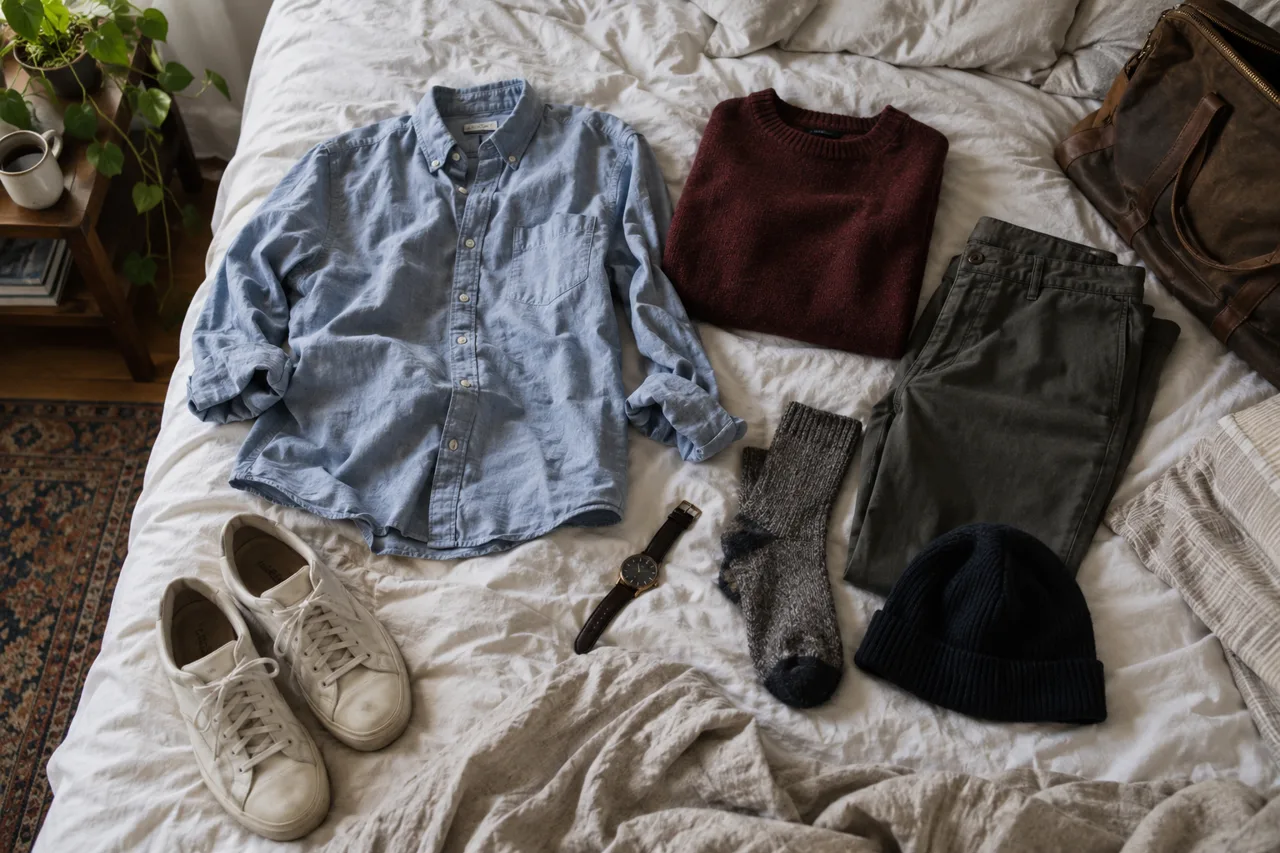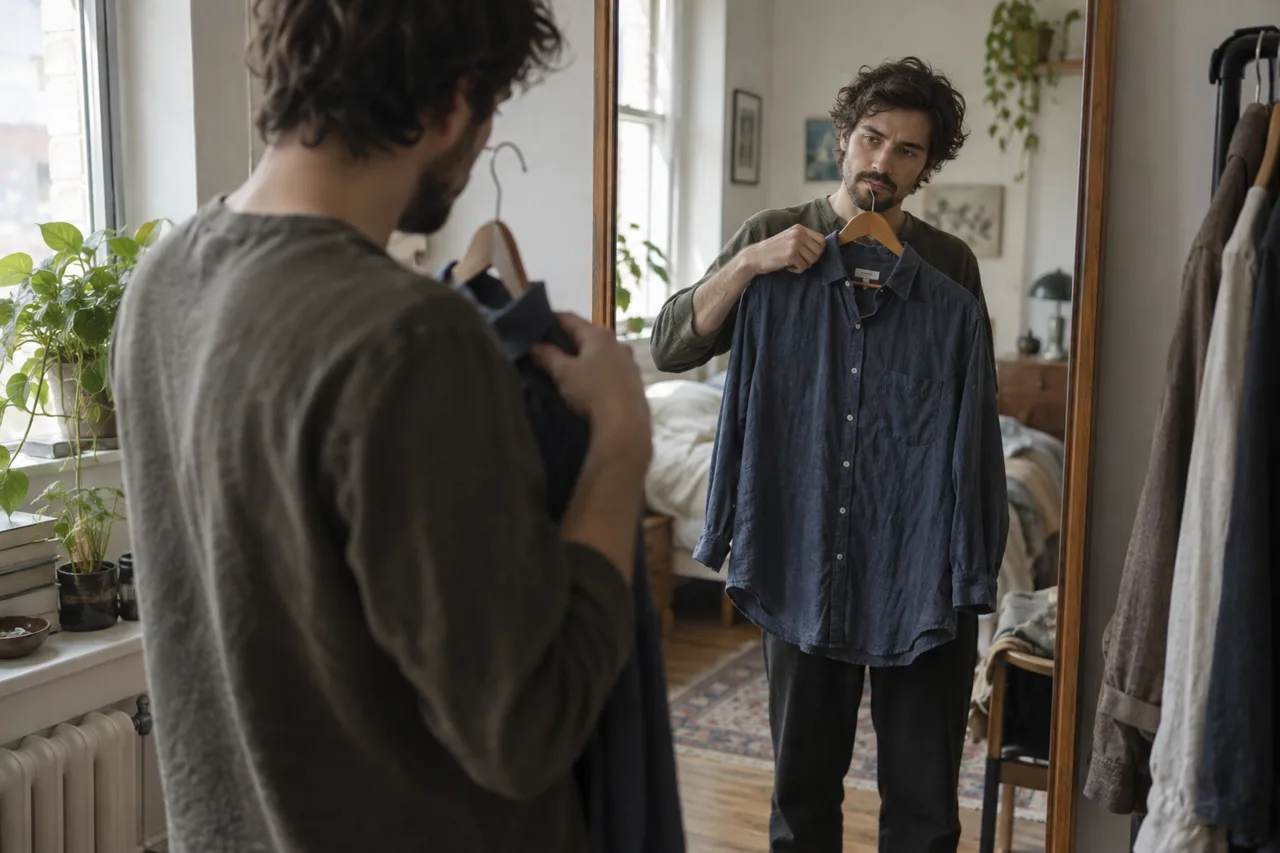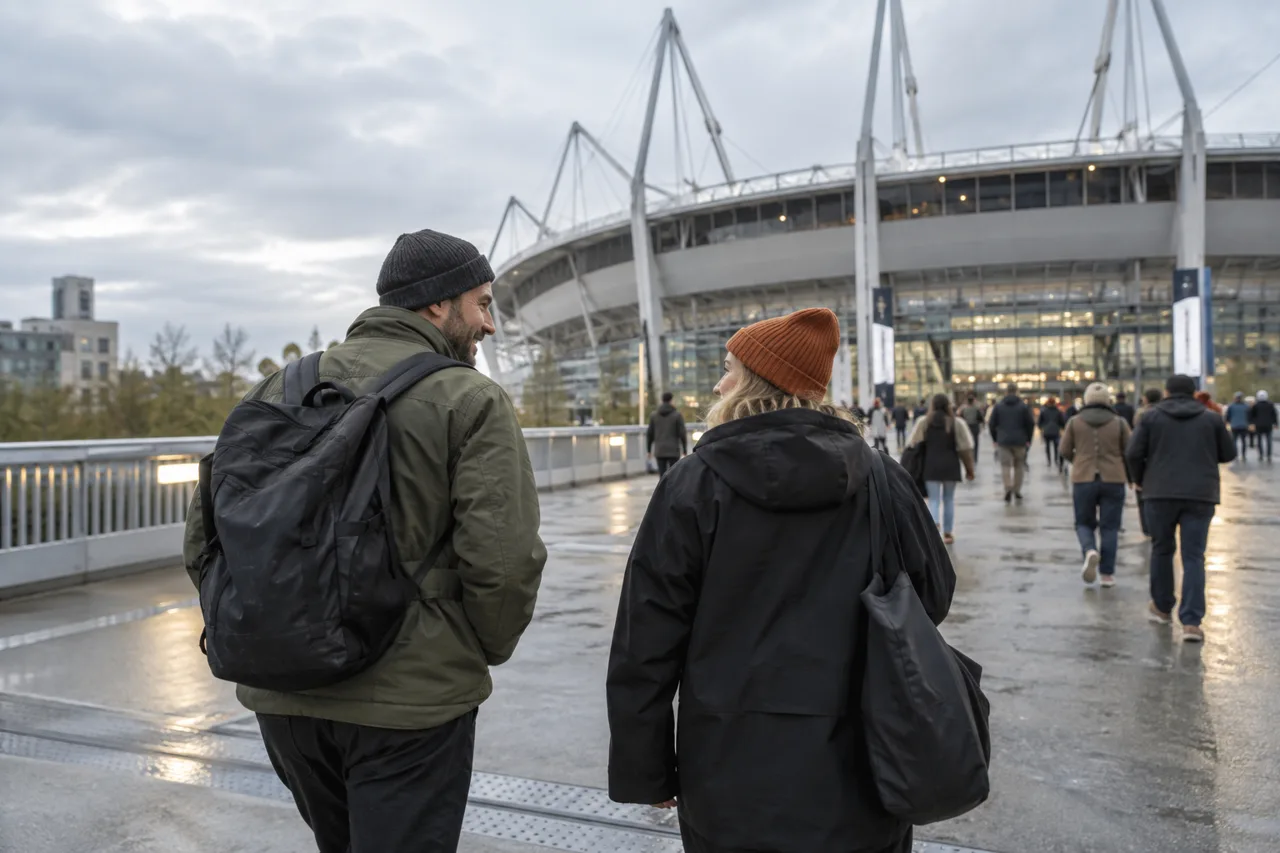
A stadium outfit has to work before you find your seat. It travels through a station or parking area, waits in a queue, climbs steps, and stays on for the journey home. Start with those ordinary demands. A comfortable pair of trousers, shoes you already trust, and a removable layer usually provide a better starting point than an outfit chosen only for the photograph at kickoff.
There is no universal stadium dress code. A covered arena, an exposed baseball stand, and a hospitality lounge ask different things of your clothes. Check your ticket details and the venue’s information first, then adapt the suggestions below to your seat, forecast, mobility needs, and personal style.
Before the wardrobe, read the day
Write down three moments: arrival, the event itself, and departure. Beside each, note whether you will be walking, standing, or sitting. Then look at the hourly forecast for the venue rather than the weather outside your own front door. A warm afternoon can lead into a cool evening, and your seat may receive very different sun or wind from the entrance.
Look at the ticket’s section and any published roof information. Do not assume that a roof over part of the building protects every seat. If the venue provides a seat view, use it to understand exposure, then confirm anything uncertain with the venue. Clothing cannot solve a dangerous weather situation; follow event instructions when conditions change.
Your travel plan matters as much as the headline temperature. A direct drop-off and a long transit connection create different demands. Plan an outfit around the route you expect to take, with enough flexibility for a delay. Avoid basing the whole decision on the few minutes you expect to spend outside.
A warm afternoon in an exposed seat
Begin with a top that feels comfortable against your skin and allows easy movement. A loose woven shirt over a simple base can give you options without requiring a heavy jacket. Try the outfit seated: fabric that floats comfortably while standing may gather around your waist once you sit down.
Choose bottoms that let you bend a knee, climb a step, and sit without a waistband digging in. Shorts, a skirt, relaxed trousers, or a dress can all work. The useful distinction is how the garment behaves during the day, not whether it appears on an approved list of sportswear. Check that hems will not drag on steps.
Think through sun exposure separately from style. A hat may be useful if permitted, but choose one that stays secure and does not obstruct people behind you. Confirm the venue’s rules about sunscreen containers and other personal items before packing. A lightweight outfit is not a substitute for a sensible plan for heat and sun.
When the temperature drops after the start
A layer that opens at the front is easy to adjust while seated. A cardigan, overshirt, or light jacket gives you more control than a heavy pullover that needs to come off over your head. Test whether the sleeves fit comfortably over your base layer without bunching at the elbows.
The layer also needs somewhere to go when you remove it. Holding a bulky coat for hours is frustrating when you are handling a ticket, drink, or mobility aid. A garment that folds onto your lap or fits within an allowed bag may be more useful than a warmer piece with nowhere to live.
For unsettled conditions, read our guide to building adjustable layers. Its main idea is simple: give each piece a job, and check the outfit with one piece removed. The shirt underneath should still feel like a complete outfit when the outer layer becomes unnecessary.
Show your team without rebuilding your wardrobe
A team shirt can sit over trousers or jeans you already like. If you prefer a quieter approach, pick one color from the team palette and repeat it in a cap, scarf, or top. You do not need to buy an entire coordinated outfit for a single afternoon.
Pay attention to proportion when a jersey is roomier than your everyday tops. You might prefer a straighter trouser leg, a small front tuck if the fabric allows it, or an open jacket that frames the shirt. These are visual options, not rules about which bodies should wear which shapes.
If you are attending with colleagues or entering a hospitality area, check for a separate dress code. The standards for a particular lounge may differ from general admission. Use the written requirement as your starting point rather than guessing from the stadium’s overall atmosphere.
Choose the bag before adding accessories
An outfit is not finished until the bag works for entry. Some events limit dimensions, materials, or the number of bags; others allow different arrangements. A small handbag is not automatically compliant, and a transparent bag is not automatically accepted. Rules can also differ between events at the same building.
You can use venue bag policies as a starting point for finding relevant guidance, then verify the current requirement on the venue or event organizer’s own website. Measure your bag against those instructions. Do not rely on the product listing’s claim that a bag is “stadium approved.”
Lay out only the items you actually need. Keep the ticket and any required identification easy to reach without scattering everything in a queue. Check official guidance for medical, accessibility, or parenting-related exceptions instead of assuming the general bag rule describes every situation.
Footwear earns its place on the walk home
Wear a pair you have already used for a comparable amount of walking. The test is not whether the shoes feel soft when you first put them on. Notice whether your heel stays in place, your toes have room, and the closure remains comfortable when you use stairs.
Match the sole to the likely surfaces. A polished indoor concourse, wet pavement, and an uneven temporary walkway are different settings. No fashion category guarantees grip, so examine the actual shoe and its condition. The event-day footwear guide offers a practical trial you can do before committing.
Avoid turning a new pair’s first outing into a long event. If your favorite look depends on a shoe that pinches, change the outfit around a more suitable pair. A slightly different silhouette is easier to enjoy than spending the evening calculating how far you still have to walk.
The five-minute departure check
Sit down in the full outfit, stand, reach into your pockets, and walk up a few steps if possible. Check that straps stay put and nothing needs constant adjustment. Wear the same socks and underlayers you intend to use at the venue; small changes can alter how the whole combination feels.
Open your ticket before leaving and review the event’s latest arrival information. Put your outer layer, bag, and shoes beside each other. If one piece creates a problem, solve it now rather than adding another item to compensate. Most event outfits improve when one awkward element is removed.
Leave room for your own preferences. Dressing for a stadium does not require adopting a sporty identity or pretending comfort looks the same on everyone. The aim is to make the practical decisions early enough that, once you arrive, your attention can stay on the event.
Practical guidance to adapt to your own needs. Check event requirements with the organizer. Read our editorial standards.